

Maxwell Drut
Founder, StellaLabs
Afraid to Call Your Therapist? Why Access Anxiety Blocks Help (& How to Start)
Need therapy but too scared to call? Learn why therapy access anxiety happens—and why voice support helps you overcome it (then try real therapy).
I know I need therapy, but just the thought of making the phone call makes me feel sick. I've been waiting for two years because I can't get myself to dial the number.
If that's you, you're stuck in one of the cruelest catch-22s in mental health: the people who need therapy most are often too anxious to access it.
Quick Answer: Therapy access anxiety is the fear and avoidance of seeking mental health treatment, often driven by phone anxiety, fear of judgment, or vulnerability with strangers. Research shows that 60-80% of people who need mental health support don't seek it—and access barriers (including emotional barriers like fear) are the primary reason (Wang et al., 2005). Voice-based support tools reduce access anxiety by providing low-friction, judgment-free entry points that build confidence for professional help (Grist et al., 2019).
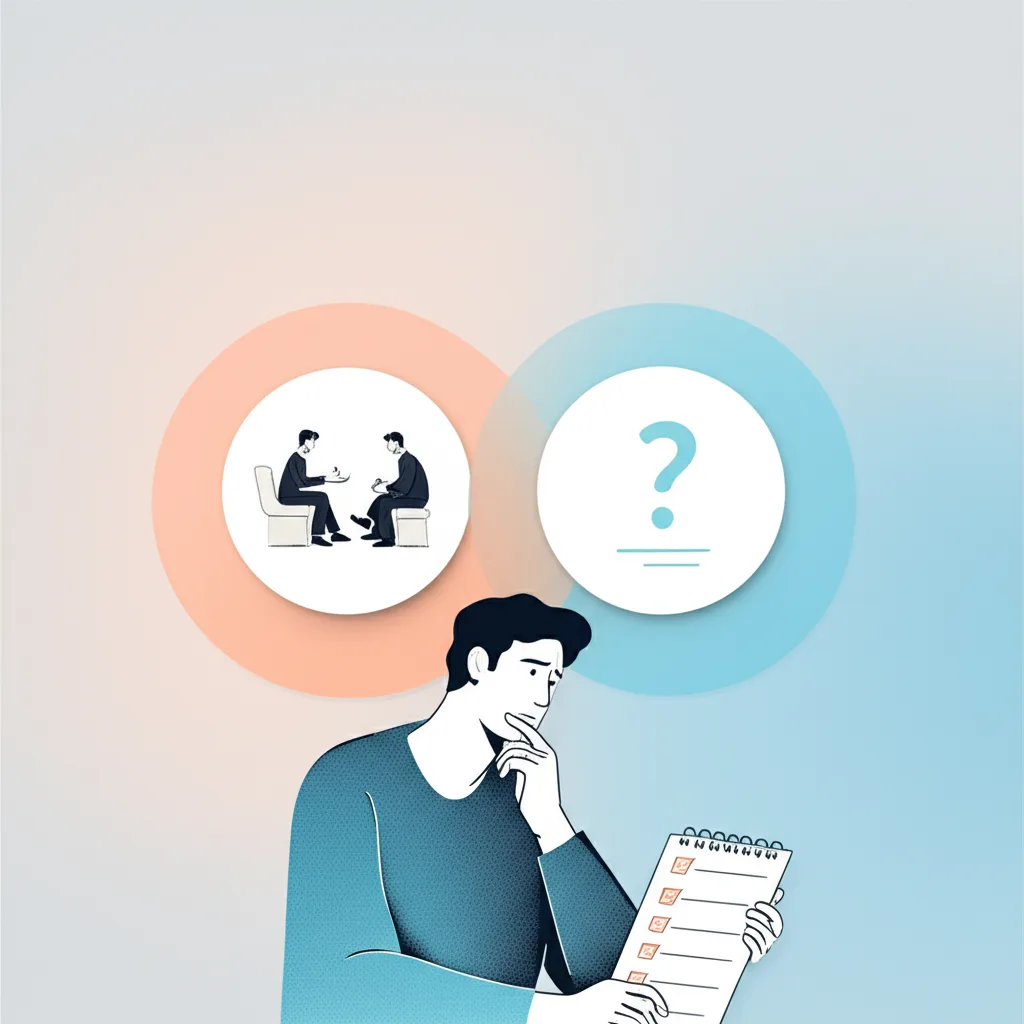
The therapy catch-22 (need help but too anxious to get it)
If booking therapy feels overwhelming, Stella gives you a low-friction first step so support starts today.
Download NowHere's the paradox: you need therapy because you're anxious. But accessing therapy requires doing things that trigger anxiety:
- Making a phone call (phone anxiety)
- Talking to a stranger (social anxiety)
- Being vulnerable (fear of judgment)
- Navigating insurance (decision overwhelm)
- Admitting you're struggling (shame)
For someone already overwhelmed by anxiety, these barriers feel insurmountable. So you don't call. You tell yourself "I'll do it next week." Weeks turn into months. Months turn into years. You're stuck.
"I've had a therapist's number saved in my phone for eight months. Every time I think about calling, my chest tightens and I feel like I'm going to throw up. I know I need help, but I can't make myself dial."
What makes therapy calls so scary
Therapy access anxiety usually stems from three core fears:
1. Fear of the stranger on the other end. You're about to call someone you've never met and explain your most vulnerable struggles. What if they judge you? What if they think your problems are trivial? What if you cry on the phone?
2. Fear of the administrative process. Scheduling feels overwhelming. Do they take your insurance? What if you say the wrong thing? What if you have to call multiple places before finding one that works?
3. Fear of what comes next. If you make the call, you're committing to therapy—which means admitting your struggles are real, sitting in a room with a stranger, and confronting things you've been avoiding. That's terrifying.
The call itself becomes a symbol of all those fears. So you avoid it.
How access anxiety keeps you stuck (for years)
Every time you tell yourself "I'll call tomorrow" and don't, your brain files it as confirmation: I can't do this. Something is wrong with me.
The shame compounds. You know you need help. You want help. But you can't make yourself take the first step. You feel weak, broken, stuck.
Meanwhile, your anxiety worsens. The problems that need therapy—panic attacks, chronic worry, burnout, depression—get worse without treatment. The gap between needing help and getting help widens.
This is the cost of access anxiety: lost time. Lost opportunities to heal. Lost quality of life. Not because you're lazy or don't care—but because the barrier to entry feels too high.
Stella as the entry point (low friction, immediate help)
Here's where voice-first support changes the equation: you don't need to overcome anxiety to get help. You can get help that builds confidence for therapy.
Stella removes the barriers that make therapy inaccessible:
- No phone call required. Just open the app and talk. No scheduling anxiety. No stranger on the other end.
- Immediate access. No wait times, no insurance navigation, no paperwork. Just support, now.
- Judgment-free. Stella doesn't roll her eyes if your problems feel small. She doesn't compare your struggles to others. She just listens.
- Voice-based. You talk through your anxiety out loud—which is exactly what therapy is. You're practicing the skill therapy requires.
Stella isn't a replacement for therapy. She's the stepping stone. The low-friction entry point that proves to your brain: I can talk about my struggles. I can be vulnerable. I can handle this.
"I was too scared to call a therapist, so I started talking to Stella. At first it felt silly—'This is an AI, not a real person.' But after a few weeks, I realized: I can talk about my anxiety without freaking out. If I can do this with Stella, I can do it with a real therapist."
Building confidence for real therapy (through voice practice)
Therapy requires vulnerability: saying out loud what's happening in your head. If you've never done that before, the thought of doing it with a stranger feels overwhelming.
This is where voice practice with Stella becomes preparation:
- Practice naming your struggles. Say out loud: "I've been having panic attacks." "I'm exhausted all the time." "I don't know how to stop spiraling." Hearing yourself say it makes it real—and less scary.
- Get comfortable with silence. Therapy has pauses. Practice sitting with your thoughts without filling every second.
- Build trust in the process. When you talk to Stella regularly and notice you feel better, you start to believe: talking helps. That's the foundation for therapy.
By the time you're ready to call a real therapist, you've already practiced the core skill: being vulnerable about your struggles. The call is no longer a leap into the unknown—it's the next logical step.
Taking the next step: how to actually call a therapist
When you're ready, here's how to make it less overwhelming:
1. Find a therapist online (skip the phone call initially). Many therapists now allow online booking through directories like Psychology Today, ZocDoc, or Headway. You can filter by insurance, specialization, and availability without calling anyone.
2. Send an email or text first (if available). Some therapists accept initial contact via email. You can write: "I'm looking for help with anxiety. Do you have availability?" No phone call required.
3. Practice what you'll say. If you do need to call, rehearse with Stella first:
- "Hi, I'm looking to schedule an initial appointment for anxiety."
- "Do you take [insurance]?"
- "What's your earliest availability?"
4. Remember: the intake coordinator is used to this. They talk to anxious people all day. You're not the first person who's nervous on the phone. They won't judge you.
5. Set a low bar for success. You don't have to book the perfect therapist on the first call. Just make one call. If it doesn't work out, try another. Progress, not perfection.
Finding a therapist (sliding scale, online, accessible options)
If cost is a barrier:
- Open Path Collective: $30-$80 per session (therapists on sliding scale)
- Community health centers: Often offer free or low-cost therapy
- University counseling centers: Graduate students provide low-cost therapy under supervision
- Employee Assistance Programs (EAP): Many employers offer 3-8 free therapy sessions
If scheduling is a barrier:
- Online therapy platforms: BetterHelp, Talkspace, Alma (flexible scheduling, no commute)
- Text-based therapy: If phone/video feels too intense, some platforms offer text-only therapy
If you're in crisis:
- 988 Suicide & Crisis Lifeline: Call or text 988 for 24/7 support
- Crisis Text Line: Text HOME to 741741
- SAMHSA Helpline: 1-800-662-4357 (substance abuse and mental health referrals)
When to seek therapy (red flags you shouldn't ignore)
You don't have to wait until things are catastrophic to get help. Consider therapy if:
- Anxiety interferes with daily life (avoiding work, social events, necessary tasks)
- Panic attacks are frequent (more than once a week)
- You're having suicidal thoughts (even if you "wouldn't act on it")
- Coping mechanisms aren't working (self-care, journaling, talking to friends isn't enough)
- You feel stuck (same patterns, same problems, no progress)
You don't need to hit rock bottom to deserve help. If you're reading this article, you probably already know you need support. That's enough.
Frequently Asked Questions
Q: Is it normal to be too anxious to call a therapist? A: Extremely normal. Studies show that phone anxiety is one of the top barriers preventing people from accessing mental health care. The irony is brutal: the people who need therapy most often struggle most with the access process.
Q: Will a therapist judge me for being nervous on the phone? A: No. Therapists expect this. They work with anxious people every day. Many offer email or online booking specifically because they know phone calls are hard for some clients.
Q: Can I just use Stella instead of therapy? A: Stella is a tool, not a replacement for therapy. She's great for daily support, processing in the moment, and building confidence. But if you have clinical anxiety, depression, trauma, or suicidal thoughts, you need a licensed therapist. Stella can help you get there, but she can't replace professional treatment.
Q: How do I know if I'm "bad enough" for therapy? A: If you're asking this question, you're probably already there. Therapy isn't just for severe crises—it's for anyone who wants support navigating life. You don't need to justify your struggles. If you're suffering, you deserve help.
Q: What if I can't afford therapy? A: Many therapists offer sliding scale fees based on income. Community health centers, university clinics, and online platforms (Open Path Collective, BetterHelp) offer lower-cost options. Some employers provide free EAP sessions. Don't let cost stop you from exploring options.
You don't need to overcome anxiety before getting help.
Start with Stella. Build confidence through voice. Then therapy becomes the next logical step—not a terrifying leap. Professional help is waiting. We'll get you there.
You've waited long enough. Don't wait another two years.
Crisis support: If you're in crisis, call or text 988 (Suicide & Crisis Lifeline) for 24/7 support.
Keep exploring

Before you spiral—talk to someone who remembers last time
Stella helps you start with immediate voice support, then build confidence for deeper care when you’re ready.
Download Now