


Maxwell Drut
Founder, StellaLabs
Social Anxiety Tips That Actually Work (Not Just 'Be Confident')
"Just be yourself!" "Everyone's nervous!" "No one's judging you!" — If generic advice worked, you wouldn't still be Googling 'how to deal with social anxiety.' Here are strategies that actually help, from therapy research and people who've survived thousands of awkward interactions.
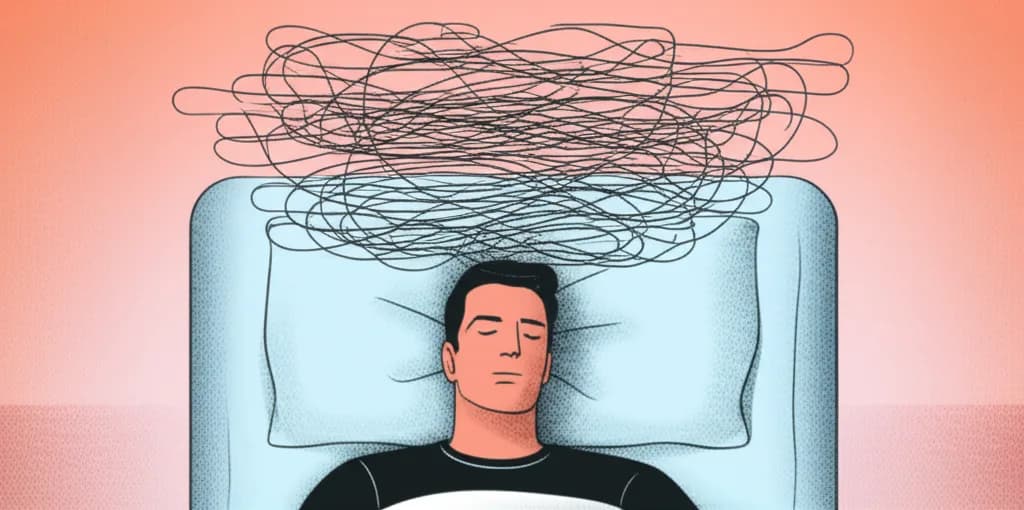
Social anxiety isn't shyness. It's not introversion. It's your brain screaming "EVERYONE IS WATCHING YOU MESS UP" even when rationally, you know that's not true. It's canceling plans last-minute because the anticipation is unbearable. It's replaying conversations for days, analyzing every word you said for evidence that people secretly hate you.
Quick Answer: The most effective social anxiety strategy is gradual exposure combined with realistic self-talk. According to the National Institute of Mental Health (2024), Cognitive Behavioral Therapy (CBT) that pairs real-world exposure with cognitive restructuring reduces social anxiety symptoms by 50-75% within 12-16 weeks—significantly more effective than avoidance or "just fake confidence" advice.
Why Generic Advice Doesn't Work
Most social anxiety advice falls into two useless categories:
- "Just be confident!" — If you could just be confident, you wouldn't have social anxiety. This is like telling someone with a broken leg to "just walk normally."
- "No one's paying attention to you!" — Your brain knows this rationally, but anxiety doesn't respond to logic. Telling yourself "no one cares" doesn't make the panic go away.
What actually works is building skills and retraining your threat detection system—not forcing yourself to think differently through willpower alone.
"Social anxiety isn't about lacking confidence—it's about your brain treating normal social situations like life-or-death threats."
9 Strategies That Actually Help
1. The Exposure Ladder (Start Stupidly Small)
Why it works: Your brain learns through experience, not logic. Each time you survive a social situation without catastrophe, your threat detection recalibrates slightly. But jumping straight to "give a speech" is too big—you need steps.
How to build your ladder:
- Rate scenarios 0-10 for how anxious they make you
- Start with a 3 or 4 (not 0, not 10)
- Practice that scenario until it drops to a 2
- Move to the next rung
Example ladder:
- Level 1: Make eye contact with cashier (3/10)
- Level 2: Ask cashier how their day is going (4/10)
- Level 3: Small talk with coworker (5/10)
- Level 4: Attend work lunch (6/10)
- Level 5: Speak up in meeting (7/10)
- Level 6: Go to party where you only know 1-2 people (8/10)
According to the Anxiety and Depression Association of America, gradual exposure is the gold standard for social anxiety treatment.
2. Script Your Opening Lines
Why it works: Half the terror of social situations is "What do I even say?" Having pre-scripted openers reduces cognitive load when you're already anxious.
5 scripts that work in most situations:
- At parties: "How do you know [host]?" (everyone has an answer)
- At networking events: "What brought you here today?" (open-ended, easy)
- Making small talk: "Crazy weather today, right?" (low-stakes, universal)
- When someone asks how you are: "Good! How about you?" (simple, shifts focus)
- Exiting a conversation: "It was great talking to you! I'm going to grab a drink/say hi to someone/use the restroom." (polite, doesn't require explanation)
Memorize 3-5 openers so your anxious brain has something to grab when it goes blank.
Stella remembers which conversation starters worked for you last time—and which ones made you spiral.
Try Stella Free3. The 'Observe Don't Interpret' Rule
Why it works: Social anxiety makes you catastrophize neutral cues. Someone doesn't laugh at your joke? Your brain screams "They hate you!" In reality, maybe they didn't hear you, or they're distracted, or they just don't think it's funny—none of which mean you're fundamentally unlikable.
How to practice:
- Notice your interpretation: "They looked away—they think I'm boring."
- Separate observation from interpretation: "They looked away [observation]. I don't know why [reality]."
- Generate 3 alternative explanations: They're checking the time, they saw someone they know, they're thinking about something else
You're not trying to convince yourself everyone loves you—you're just acknowledging that you don't have telepathy.
4. The 'Spotlight Effect' Reality Check
Why it works: Social anxiety makes you think everyone is watching and judging you—the "spotlight effect." Research from Cornell University (2000) shows people overestimate how much others notice their behavior by 200-300%.
Quick experiment:
- Think about the last party/gathering you went to
- Try to remember what anyone else was wearing
- Try to remember anything awkward they said or did
Can't remember? That's because you were focused on yourself—just like everyone else was focused on themselves. This doesn't fix anxiety immediately, but it's data your brain can use over time.
"You're not the main character in everyone else's story—you're background noise. And that's actually great news."
5. The '3-Second Rule' for Awkward Silences
Why it works: Social anxiety makes silences feel like emergencies. In reality, 3 seconds of silence is totally normal—your brain just perceives it as 30 seconds.
How to tolerate silence:
- Count to 3 slowly when a silence hits
- If the other person speaks first, great—you didn't have to fill it
- If not, then you speak—but give them a chance first
You'll realize that most "awkward" silences are just... pauses. Normal human pauses. Not catastrophes.
6. Have an Exit Strategy (Reduces Entry Anxiety)
Why it works: A huge part of social anxiety is feeling trapped—"What if I want to leave but can't?" Having a pre-planned exit reduces anticipatory anxiety because you know you have control.
Exit strategies:
- Drive yourself (don't rely on someone else for a ride)
- Set a time limit in advance: "I'll stay for 1 hour" (permission to leave guilt-free)
- Have a believable excuse ready: "Early morning tomorrow," "Headache coming on," "Need to let the dog out"
- Tell one person you trust: "If I text you 'Call me,' call me so I have a reason to leave"
Paradoxically, knowing you CAN leave often makes you comfortable enough to stay longer.
7. Lower the Stakes (Stop Treating Every Interaction Like a Test)
Why it works: Social anxiety makes every conversation feel like a performance review. In reality, most interactions are low-stakes and forgettable—for everyone involved.
Reframe your goal:
- Not: "I need everyone to like me"
- Instead: "I'm going to practice talking to humans"
- Not: "I need to be interesting and funny"
- Instead: "I'm going to ask questions and listen"
Treating social situations as practice (not tests) removes the pressure to be perfect.
8. Anchor to Your Body (Not Your Thoughts)
Why it works: When your thoughts spiral ("Everyone thinks I'm weird"), grounding in physical sensations interrupts the anxiety loop.
Mid-conversation grounding:
- Feel your feet on the floor (pressure, temperature)
- Notice your breath (without changing it—just observe)
- Focus on external sounds (music, traffic, voices) instead of internal thoughts
You're essentially giving your brain an alternative task that's less threatening than "analyze whether everyone hates you."
9. Post-Mortem Rule: 10 Minutes Max
Why it works: Social anxiety doesn't end when the event ends—you replay it for hours (or days) afterward, analyzing every awkward moment. This reinforces anxiety by teaching your brain "social situations are threats that require extensive debriefing."
How to limit post-event rumination:
- Set a 10-minute timer after the event
- Vent/debrief for those 10 minutes (journal, talk to a friend, talk to Stella)
- When timer ends, consciously redirect ("I'm done processing this")
- If thoughts return, remind yourself: "I already processed this"
You're not suppressing emotions—you're containing them so they don't colonize your entire week.
What About Medication and Therapy?
Medication (SSRIs): Can help reduce baseline anxiety levels, making exposure work less overwhelming. Commonly prescribed: Zoloft, Prozac, Lexapro. Takes 4-6 weeks to work.
Beta blockers: Help with physical symptoms (racing heart, shaking) during high-stakes situations (presentations, interviews). Fast-acting but doesn't address underlying anxiety.
Therapy (CBT): The gold standard. Combines exposure therapy with cognitive restructuring. Success rate: 50-75% symptom reduction in 12-16 weeks.
Medication + therapy together works better than either alone, according to research from the American Psychological Association.
Common Questions About Social Anxiety
Is social anxiety the same as shyness?
No. Shyness is a personality trait—you can be shy without anxiety. Social anxiety is a disorder where fear of judgment is so intense it interferes with daily life (avoiding work events, losing friendships, inability to advocate for yourself). Shyness is "I'm quiet at parties." Social anxiety is "I cancel plans because the anticipation makes me physically ill."
Will I ever be fully comfortable in social situations?
Maybe not "fully" comfortable, but significantly less anxious? Yes. Most people with social anxiety see dramatic improvement with treatment. The goal isn't to become an extrovert—it's to reduce anxiety enough that you can do the things you want to do without debilitating fear.
Can alcohol help social anxiety?
Short-term, yes—alcohol reduces inhibitions and anxiety temporarily. Long-term, it makes social anxiety worse by preventing you from learning that you can handle social situations sober. It also creates dependency risk. Better to practice sober coping skills.
How do I know if I need professional help?
If social anxiety is preventing you from living your life (missing work, losing relationships, extreme isolation), or if self-help strategies haven't helped after 2-3 months of consistent effort, talk to a therapist. Social anxiety disorder is highly treatable—you don't have to suffer alone.
What if I have social anxiety AND I'm introverted?
You can be both. Introversion means you recharge alone; social anxiety means you fear judgment. Treatment for social anxiety won't make you an extrovert—it just reduces the fear so you can socialize when you want to (and recover alone after).
Stella is your emotional wellness AI. Speak or text about what stayed with you, understand how you feel and choose how you want to respond. Stella is not therapy, and this article is general information rather than medical advice.
Related reading
- Social Anxiety Recovery: From Severe to Functional (Real Steps That Work)
- Stop Replaying Conversations: Break the Social Anxiety Spiral
- Breathing Exercises for Anxiety: Beyond 'Just Breathe' (What Actually Works)
- Social Anxiety at Work: How to Survive Meetings Without Panicking
- Separation Anxiety in Adults: It's Not Just for Kids
Keep exploring


Tell Stella what happened. Even the part you're still figuring out.
Stella is your emotional wellness AI. Tell Stella what happened, or what you keep putting off, by voice or text. She keeps what you've told her in mind, tells you straight but kindly, and helps you find the words or choose a small step when you're ready. No streaks, nothing to log.
Get the app